Partnership for People with Disabilities Presents ECSE BEST Workforce Research at National AERA Conference
July 1, 2026
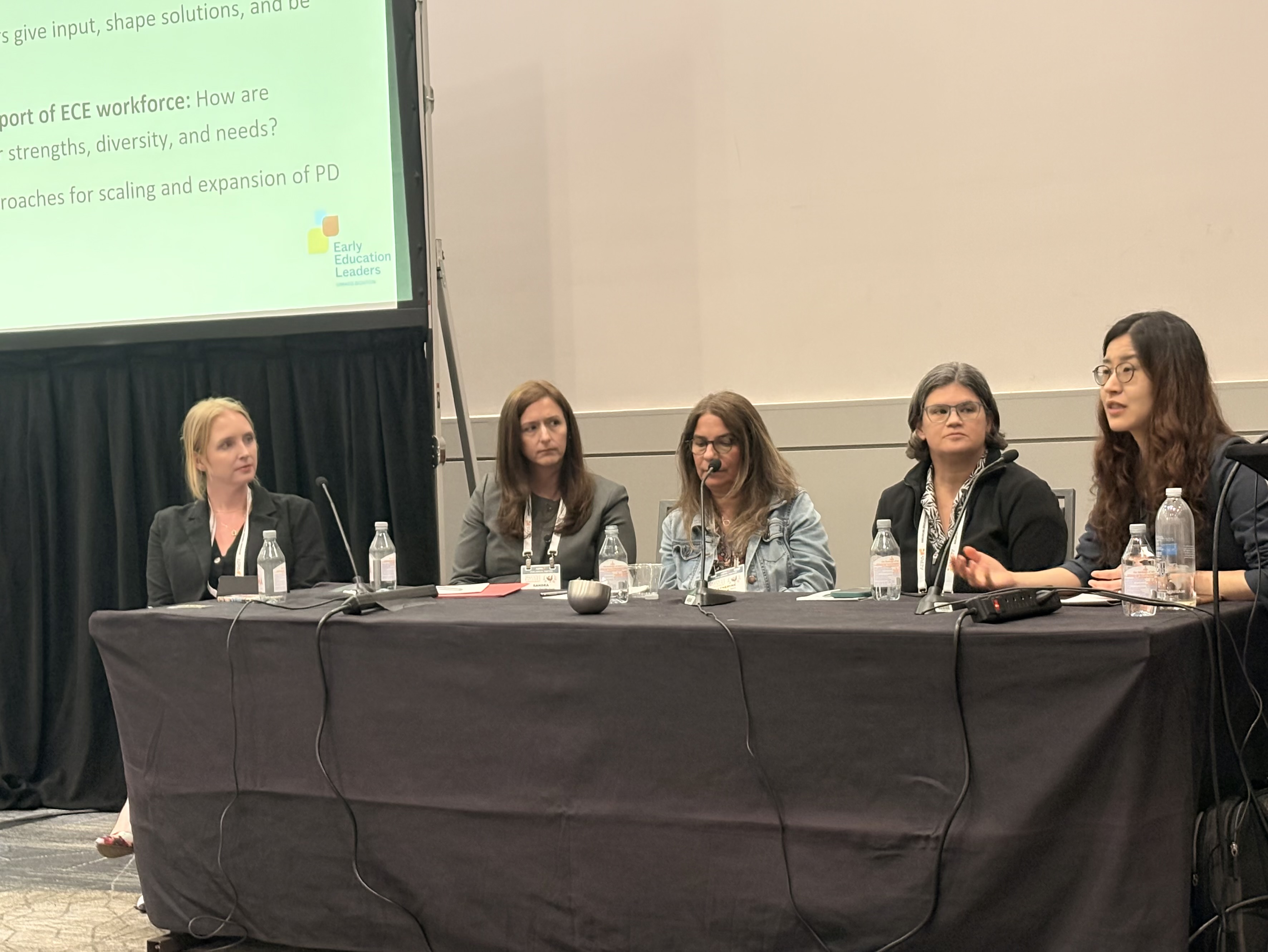
The Partnership for People with Disabilities took its early childhood special education workforce research to the national stage this year, presenting findings from its ECSE BEST initiative at the 2026 AERA annual conference of the American Educational Research Association (AERA).
The Partnership joined research teams from three other states for the symposium "Supporting the ECE Workforce: Findings from Four System-Level Professional Development Initiatives," a session examining how states are working to strengthen and stabilize the early childhood education (ECE) workforce through targeted, systems-level approaches to professional development.
A Closer Look at ECSE BEST
The Partnership's contribution to the symposium, "Piloting a Collaborative Approach to Workforce Development in Early Childhood Special Education," presented results from a pilot training initiative designed for early-career and provisionally licensed teachers working in early childhood special education (ECSE).
The program, known as ECSE BEST, was built around evidence-based practices and structured peer collaboration. According to the study's findings, participants showed measurable gains across several key areas:
- Confidence in practice: The share of teachers who described themselves as "Completely Confident" in supporting young children with disabilities rose from 20% before the training to 60.9% afterward.
- Core competencies: Participants demonstrated significant growth in core competency domains, including individualized instruction and IEP planning frameworks.
- Participant satisfaction: 82.6% of participants reported being "Highly Satisfied" with the training. One educator described the course as "spot on with my professional needs and goals."
Part of a Broader Push for Equity in the ECE Workforce
ECSE BEST's presentation was one of four studies featured in the symposium, each examining professional development strategies aimed at educators who are frequently left out of broader workforce reform efforts — including family child care providers, multilingual educators, and special education teachers like those served by ECSE BEST.
Among the strategies presented across the four studies were flat supplemental payments for early educators, language-aligned professional development programming that more than doubled course completion rates, and residency-based alternative licensure pathways designed to bring more qualified teachers into the field.
Taken together, the presentations made the case that intentional, systems-level design — rather than one-size-fits-all training — is key to building a stronger, more stable early childhood workforce.
Looking Ahead
The Partnership for People with Disabilities congratulates the ECSE BEST team and all collaborating partners on their presentation and on the program's continued impact. The findings reinforce a core principle behind ECSE BEST's approach: that practical, research-aligned professional development helps ensure every young child is supported by a confident, effective educator.
The Partnership for People with Disabilities is based at Virginia Commonwealth University. For more information about the Partnership's work in early childhood special education, visit www.partnership.vcu.edu.